Support our educational content for free when you purchase through links on our site. Learn more
Celebrity Phone Accessory Endorsements: Style or Hype? 📱

Celebrity phone accessory endorsements can help you discover a case worth considering, but they can’t prove it will protect your phone. Check the exact model fit, materials, compatibility, and any substantiated protection claims before letting a famous face make the sale.
A celebrity’s case can look like the perfect finishing touch in a photo. But as we found while reviewing celebrity case trends, a mirror finish, custom print, or viral design tells you much more about someone’s style than how the case handles a drop.
That doesn’t make endorsements useless. They’re a handy way to spot brands and collaborations; the trick is separating celebrity appeal from product evidence. Here’s how to tell which is which—and what to check before you buy.
Key Takeaways
- Treat endorsements as inspiration, not proof of protection. A celebrity sighting doesn’t confirm a paid partnership, product testing, or drop resistance.
- Verify the exact case and phone model. Similar-looking phones can have different dimensions and camera layouts.
- Look beyond the campaign. Check edge and corner coverage, materials, charging compatibility, and specific test details.
- Read sponsorship disclosures. The FTC’s endorsement guidance explains when material connections may need to be disclosed.
- Choose based on your priorities. Explore fashion cases, designer cases, custom cases, and eco-friendly cases, then compare the details that matter to you.
Table of Contents
- ⚡️ Quick Tips and Facts
- 📱 What Counts as a Celebrity Phone Accessory Endorsement?
- 🕰️ How Celebrity Phone Accessory Marketing Evolved
- 🌟 15 Notable Celebrity Phone Accessory Endorsements and Collaborations
- Brand ambassadors, sponsored posts, and product collaborations
- Phone cases, headphones, earbuds, chargers, and other accessories
- 🔍 How Celebrity Endorsements Influence Phone Accessory Buyers
- 📣 Types of Celebrity and Influencer Phone Accessory Deals
- 🤝 Why Phone Accessory Brands Hire Celebrities
- 🧠 What Makes an Endorsement Feel Credible—or Cringey?
- 📊 How Brands Measure Celebrity Endorsement Results
- ⚖️ Sponsorship Disclosures, Advertising Rules, and Consumer Protection
- 🛡️ How to Check Celebrity-Linked Phone Accessories Before Buying
- 💼 What Brands Should Consider Before Signing a Celebrity Deal
- 🔮 The Future of Celebrity Phone Accessory Endorsements
- ✅ Conclusion
- 🔗 Recommended Links
- ❓ FAQ
- Do celebrities actually use the phone accessories they endorse?
- How can you tell if a celebrity post is sponsored?
- Do celebrity endorsements make phone accessories better?
- What is the difference between a celebrity endorsement and a collaboration?
- How do phone accessory brands choose celebrity ambassadors?
- 📚 Reference Links
⚡️ Quick Tips and Facts
First, a useful reality check: a celebrity endorsement is a marketing signal, not a durability test. A famous person may make a case look irresistible; the case still needs the right fit, useful drop protection, and a design you’ll happily carry every day. For more celebrity case examples, see our guide to what phone case brand the Kardashians use.
| At a glance | What we recommend |
|---|---|
| Best reason to consider a celebrity-linked case | You genuinely like its design, personalization, or collaboration story |
| Best protection check | Confirm your exact phone model, raised screen and camera edges, materials, and any published drop-test details |
| Most common mistake | Assuming “celebrity-worn” or “military-grade” automatically means better protection |
| Best purchase strategy | Compare the celebrity’s actual case with the brand’s specifications and independent user reviews |
| Good starting categories | Fashion Cases, Designer Cases, and Custom Cases |
| Bottom line | Buy the case for its fit and protection; let the celebrity endorsement be the fun bonus. |
Fast facts worth knowing 📱
- “Celebrity endorsement” can mean a paid post, a brand ambassadorship, a licensed collaboration, a gifted product, or simply a celebrity being photographed with an accessory. Those arrangements are not interchangeable.
- A celebrity’s phone appearing in a photo does not establish the phone-case brand, whether the case is a current product, or whether the celebrity was paid to use it.
- The U.S. Federal Trade Commission says endorsements must not mislead consumers, and material connections between endorsers and brands may need clear disclosure. See the FTC’s Endorsement Guides.
- A drop-test claim describes a particular test setup, not a promise that every phone survives every fall. Look for the test method, device model, and conditions rather than relying on a badge alone.
- A beautiful case can still have practical benefits, but style, protection, and ease of use need separate checks. A mirror case, wallet attachment, or unusually shaped design may not suit everyone.
📱 What Counts as a Celebrity Phone Accessory Endorsement?
A celebrity phone-accessory endorsement is any visible or stated connection between a public figure and a brand selling phone cases or related accessories—such as MagSafe wallets, chargers, straps, grips, earbuds, or screen protectors.
The tricky part? A celebrity using a product is not automatically an endorsement. A paparazzi photo showing a case is evidence that the case appeared in a photo, not proof of a contract, payment, or product review.
| Type of connection | What it usually means | What you should not assume |
|---|---|---|
| Paid social post | The creator or celebrity received compensation or another benefit for promoting a product | That the person uses it outside the campaign |
| Brand ambassador | An ongoing promotional relationship, often involving multiple campaigns | That every accessory shown is part of the partnership |
| Licensed collaboration | A celebrity, artist, or representative participates in a product or design agreement | That the celebrity personally tested its protection |
| Gifted product | The brand supplied a product, possibly with no payment | That the post is unpaid in every other respect |
| Editorial or event sighting | A product appears in a photo, interview, or public appearance | That the celebrity endorses the brand |
| Organic use | The person may have chosen or customized the accessory independently | That the choice is a recommendation for all buyers |
The endorsement spectrum: from ad to candid sighting
At one end is an unmistakable advertisement: a branded post with a sponsorship disclosure and a product link. At the other is a blurry phone spotted in someone’s hand, which is about as strong a product endorsement as a mystery case pulled from a coat pocket.
We recommend looking for three separate clues:
- A direct statement: Does the celebrity name or tag the brand?
- A disclosed relationship: Does the post say “Ad,” “Paid partnership,” or otherwise explain a material connection?
- A product match: Can you identify the exact model, not just a similar-looking case?
If one of those is missing, keep your confidence modest. The FTC’s guidance explains that endorsements should reflect honest opinions and that paid or otherwise material relationships may need disclosure (FTC endorsement guidance).
What counts as a phone accessory?
For this topic, we include accessories designed to protect, carry, charge, or personalize a phone:
- Protective phone cases and folio cases
- Wallet cases and MagSafe-compatible wallets
- Phone straps, grips, and stands
- Camera-lens covers and screen protectors
- Charging cables, wireless chargers, and battery packs
- Earbuds and headphones when promoted as part of a mobile lifestyle
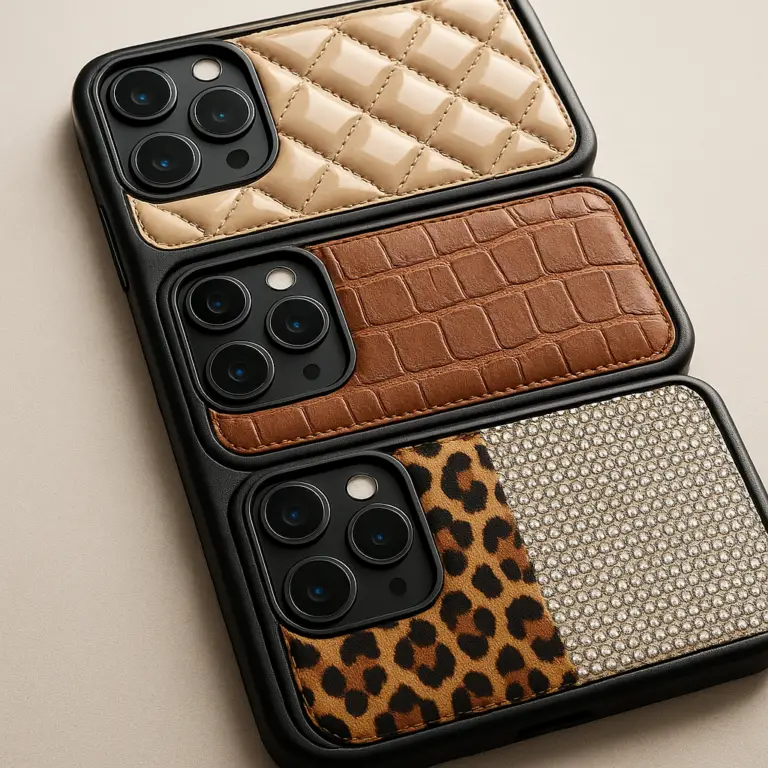
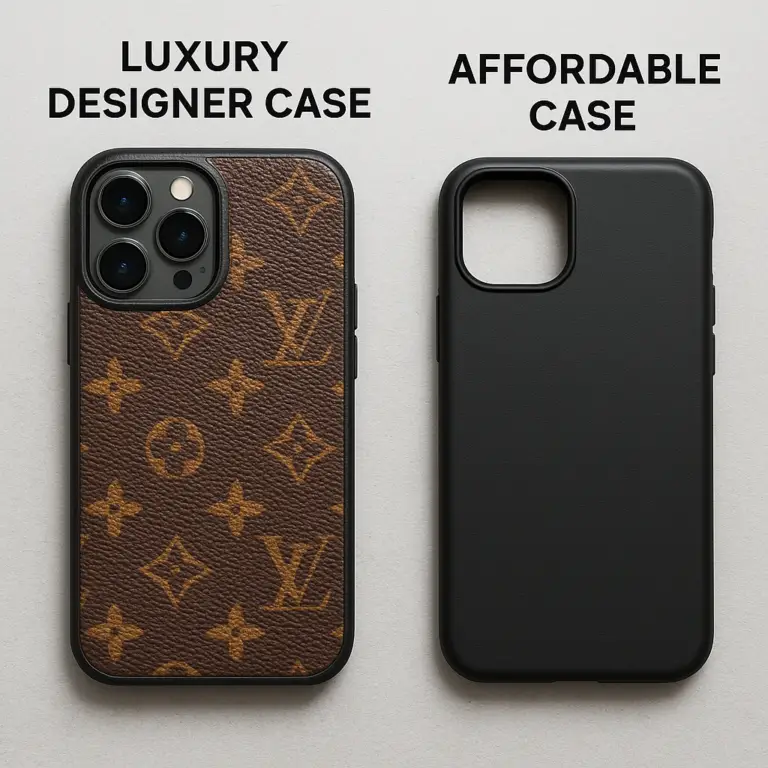
A fashion-focused case may belong in our Designer Cases coverage, while customized prints and name or photo designs fit naturally with Custom Cases. The label tells you about the style lane, not the impact performance.
🕰️ How Celebrity Phone Accessory Marketing Evolved
Phone accessories moved from practical afterthought to highly visible fashion item. Early cases were often chosen to prevent scratches or make a phone easier to grip. As phones became constant companions—and cameras made them part of the outfit—cases also became personal style, collectible merchandise, and social-media props.
The endorsement format changed along with the product:
| Era or shift | What changed | Why it matters to buyers |
|---|---|---|
| Utility-first accessories | Cases mainly served as basic protection | Branding and celebrity styling were less central |
| Fashion and personalization | Prints, colorways, monograms, and designer collaborations became more visible | Buyers could treat a case as an accessory, not just armor |
| Social-media promotion | Short-form posts and tagged products made campaigns immediate and shoppable | Sponsorship disclosure and authenticity became more important |
| Creator-led recommendations | Influencers and niche reviewers built audiences around specific interests | A smaller creator may offer more useful hands-on detail than a celebrity ad |
| MagSafe and accessory ecosystems | Cases increasingly work with wallets, chargers, stands, and mounts | Compatibility matters alongside the case itself |
From billboard to everyday carry
A celebrity wearing a case in public can spark recognition, but social platforms made the product link almost frictionless: see it, tap it, buy it. That convenience is helpful, yet it compresses the decision process. A split-second style reaction can crowd out the dull-but-essential questions: Will it fit my phone? Does it protect the camera? Is it compatible with my charger?
For a broader look at brands and styles, browse our Case Brand Guides and Fashion Cases.
🌟 15 Notable Celebrity Phone Accessory Endorsements and Collaborations
Celebrity phone-accessory coverage often mixes formal collaborations with products spotted in photos or discussed by commentators. To keep those claims in their proper lanes, the examples below are not presented as verified paid endorsements unless a public brand relationship is clearly documented. They’re useful as style and product references, not proof that a celebrity personally recommends a case’s protection.
| Celebrity or public figure | Accessory or brand associated in the supplied video summary | What the example illustrates | Buyer takeaway |
|---|---|---|---|
| Ariana Grande | Apple silicone cases and charging setup | Minimalist, practical styling | A familiar case can look polished without a loud print |
| Kylie Jenner | Mirror-style CASETiFY cases | Selfie-friendly, statement design | Check mirror usability and added bulk |
| Emma Chamberlain | Wildflower and Apple cases | Mixing expressive and simple looks | You can rotate styles without changing your protection checklist |
| Billie Eilish | Wallet attachments or apparently minimal case use | Fashion choices may leave more exposed surfaces | Don’t copy a setup until you understand its protection trade-offs |
| Bella Hadid | Customized, embellished Wildflower case | Personalization as part of an outfit | Decoration can add character, but inspect edges and grip |
| Molly-Mae Hague | A range of CASETiFY designs | Changing cases to suit different looks | Confirm model-specific fit each time you buy |
| Doja Cat | Quirky, unconventional case shapes | Accessories can become conversation pieces | Unusual shapes can affect pocketability and one-handed use |
| The Kardashians | Celebrity-associated case styles covered in our guide | Familiarity and family style can shape product discovery | Treat sightings as clues, then verify the exact item |
| Athletes and sports ambassadors | Brand or cause partnerships vary | Performance reputation can influence credibility | Look for a clear match between the person and product |
| Musicians | Fashion-led accessories and branded merchandise | Cases can work as wearable fan merchandise | Distinguish licensed merchandise from protection claims |
| Actors | Cases seen interviews or public appearances | Organic sightings can generate search interest | A sighting alone does not confirm endorsement |
| Beauty creators | Highly styled cases and phone grips | Accessories fit naturally into beauty and outfit content | Check whether close-up visuals hide practical drawbacks |
| Tech creators | Hands-on case reviews and accessory demonstrations | Product expertise can be more relevant than fame | Look for model details and test conditions |
| Fashion designers | Limited-edition prints and licensed designs | A collaboration can deliver distinctive aesthetics | Check whether the base case is protective enough for your needs |
| Social-media creators | Sponsored case posts and affiliate links | Creator recommendations can be directly shoppable | Read disclosure language and independent reviews |
What the featured video says about celebrity cases
The featured video takes a creator’s personality-driven approach: Maybeheilly calls herself a “professional phone case person” and rates celebrity cases on aesthetics, practicality, and uniqueness. In the summary provided, Ariana Grande’s minimalist Apple case receives 9.86/10, Emma Chamberlain’s varied collection gets 9/10, and Kylie Jenner’s mirror cases score 7/10. Bella Hadid and Molly-Mae Hague earn playful scores above 10, while Billie Eilish’s limited-protection-looking setup gets a comic −4/10.
Those scores are entertainment, not lab results—and that’s the point. The video is useful for spotting style signals and asking better questions, but it cannot establish drop protection, long-term wear, or compatibility. We’d take its taste notes, then do the practical homework before buying.
1. Ariana Grande: minimalism with practical appeal
The video summary praises a simple Apple silicone case and a charging setup, framing the look as polished and functional. Apple’s iPhone accessories page is the place to verify current case compatibility and product details; the celebrity sighting itself is not a guarantee that the exact accessory is still sold.
2. Kylie Jenner: mirror-case style
Mirror-finish cases have obvious selfie appeal, but a reflective back can collect fingerprints, show scratches, or make a case feel more slippery. CASETiFY offers phone cases and collaborations on its official site; check the exact model’s materials and protection description before purchasing.
3. Emma Chamberlain: variety over one signature look
The video summary describes a mix of Wildflower and Apple cases, and notes the reviewer was influenced to buy a red Apple case. That’s a nice example of style influence in action: one creator’s taste can prompt a trial purchase. Wildflower’s official phone-case collection and Apple’s case listings let shoppers compare designs and compatibility directly.
4. Billie Eilish: a reminder that style can leave trade-offs
The creator’s negative rating is a humorous warning about wallet attachments or seemingly bare phones. We can’t confirm from the video summary exactly what protection each setup offered, so we wouldn’t treat the rating as a product test. The lesson is simpler: a wallet attachment does not necessarily protect the back, corners, or screen.
5. Bella Hadid: customization and embellishment
A bedazzled or customized case can feel uniquely yours. The trade-off is that raised decorations may snag in pockets, catch on bags, or wear down. Wildflower’s official case collection is one place to explore expressive designs; for broader personalization options, see Custom Cases at Case Brands™.
6. Molly-Mae Hague: the joy of rotating designs
A rotating case collection makes sense when a phone is part of your daily outfit. But every case swap is another chance to buy the wrong model. Confirm the phone generation and any camera-layout differences before checkout, even if a familiar brand name is on the box.
7. Doja Cat: memorable shapes, practical questions
A heart-shaped eye or knife-inspired case is built to attract attention. It may also be bulky, awkward in a pocket, or less convenient with a wireless charger. Novelty can be delightful; just check whether the shape interferes with buttons, ports, stands, or accessory magnets.
Brand ambassadors, sponsored posts, and product collaborations
A partnership can be a single sponsored post, a continuing ambassador role, or a designed collection. To tell which one you’re seeing:
- Read the caption and hashtags. Look for sponsorship disclosures and brand tags.
- Open the brand’s official campaign page. A real collaboration is often described there.
- Check the product name and model. A celebrity’s case may be discontinued, customized, or unavailable in your phone size.
- Separate product storytelling from performance evidence. Campaign photography can show a product beautifully; it rarely tells you how it behaves after a fall.
The FTC’s guidance states that endorsements should reflect honest opinions and that a material connection can require disclosure (FTC Endorsement Guides). A campaign’s polished look is not a substitute for product specifications or independent testing.
Phone cases, headphones, earbuds, chargers, and other accessories
The celebrity phone-accessory category is broader than cases:
| Accessory | What to check before buying |
|---|---|
| Phone case | Exact model, corner coverage, raised edges, button feel, materials, and drop-test details |
| Screen protector | Compatibility with the case, coverage, installation method, and touch response |
| Camera protector | Lens compatibility, flash behavior, and whether it fits with the case |
| MagSafe wallet or grip | Magnet alignment, attachment strength, card access, and charging compatibility |
| Wireless charger | Phone and case compatibility, charging standard, heat management, and power adapter requirements |
| Earbuds or headphones | Device compatibility, fit, battery claims, microphone quality, and return policy |
| Phone strap or charm | Attachment security, case compatibility, snag risk, and comfort |
A matching set can look tidy, but compatibility is a chain: the case must fit the phone, the accessory must fit the case, and the charging setup must support the combination.
🔍 How Celebrity Endorsements Influence Phone Accessory Buyers
Celebrity marketing can affect what people notice, search for, and consider buying. It does not follow that an endorsement automatically convinces everyone—or that it makes the product better.
A research article discussing athlete endorsements summarizes a familiar principle: the presence of a sports celebrity alone does not necessarily boost purchase intentions, while perceived fit between endorser and product can matter. The paper quotes prior work saying, “The existence of a sports celebrity endorser per se does not have a positive direct influence on consumers purchase intentions,” and that intentions may increase with “perceived endorser-product congruence.” This is general endorsement research, not a phone-case sales experiment; read the full article on PubMed Central with that limitation in mind.
The influence chain: attention, interest, evaluation, purchase
| Stage | What a celebrity can do | What you should do |
|---|---|---|
| Attention | Put an unfamiliar brand in your feed | Notice the brand, but don’t confuse reach with quality |
| Interest | Make a design feel culturally relevant | Ask whether you like the case beyond the celebrity association |
| Evaluation | Provide an example of how it looks in use | Check fit, materials, compatibility, and independent feedback |
| Purchase | Add social proof or a direct shopping link | Compare the exact product and its return terms before buying |
| Advocacy | Encourage fans to share or collect designs | Decide whether the product earns your recommendation on its own |
Why product–celebrity fit matters
A tech reviewer discussing button response may have more practical credibility on a case than a famous actor holding it in a red-carpet photo. A fashion figure may be persuasive about color and styling. An athlete might be relevant to grip and active use—but only if the product claim is clear and substantiated.
The PubMed Central study’s athlete interviews focus primarily on sport and social-cause advocacy, not phone accessories. Participants emphasized genuine values and noted that audiences can sense when a partnership appears financially motivated. The article reports one concern this way: “fans are fast to notice when a partnership is made only for financial or public relation purposes.” That’s a useful lens, not direct proof that a particular phone-case campaign worked.
What celebrity influence cannot tell you
An endorsement alone cannot establish:
- Whether the product fits your exact device
- How well it protects against your likely accidents
- Whether the finish yellows, scratches, or pels over time
- Whether a magnetic wallet stays secure in your bag
- Whether a limited edition is worth choosing over a less-hyped alternative
Fame gets the case into your consideration set. Evidence helps it stay there.
📣 Types of Celebrity and Influencer Phone Accessory Deals
Paid endorsements
The celebrity receives payment or another benefit to promote a product. A post can include a discount code, product link, campaign tag, or paid-partnership label. Check the disclosure and the exact claims being made. A personal-sounding caption is still advertising if there is a material connection that should be disclosed.
Brand ambassadorships
An ambassador relationship is typically ongoing or broader than one campaign. A public figure may appear in multiple ads, attend brand events, or feature several products. It can make the brand’s story more consistent, but it still does not show that the ambassador independently tested every item.
Licensed collaborations
A licensed collaboration may put a celebrity’s name, artwork, or visual identity on a case. It can offer a distinctive design and may be officially authorized. Licensed does not mean drop-tested, so check the underlying case’s specifications.
Affiliate and creator links
Creators may earn a commission when a viewer purchases through a link. That arrangement can be disclosed in the post or near the link. Affiliate links can coexist with honest reviews; they simply create a financial connection worth understanding.
Gifted-product posts
A brand may provide a case without paying for a post. Gifted items can still create a material connection, depending on the circumstances and applicable rules. When in doubt, look for clear disclosure and evaluate the product separately.
🤝 Why Phone Accessory Brands Hire Celebrities
Brands partner with famous people because they can help a product get noticed and give it a recognizable style context. A case is small, visual, and frequently photographed, which makes it an easy accessory to feature in outfit content, music videos, interviews, and social posts.
Common brand goals
- Awareness: Introduce a brand to people who haven’t heard of it.
- Distinctive positioning: Connect the product to a particular fashion or lifestyle identity.
- Social proof: Show an accessory in a recognizable person’s daily or public life.
- Launch momentum: Help a new collection attract early attention.
- Community and fandom: Offer designs that fans may want to collect.
- Content creation: Generate campaign photography, short videos, and press coverage.
The brand-fit test
A partnership tends to make more sense when:
- The celebrity’s style or expertise fits the product category.
- The product is relevant to the audience.
- The campaign claims are supported by accurate product details.
- The partnership feels consistent with the celebrity’s public identity.
- The product still stands up when the famous face is removed from the ad.
For brand discovery, our Case Brand Guides compare case makers across style and use cases. If the celebrity connection is mainly visual, Fashion Cases may be the right starting point. For a personal design rather than a star’s design, browse Custom Cases.
🧠 What Makes an Endorsement Feel Credible—or Cringey?
A credible endorsement gives you a reason to believe the person is a plausible fit for the product. A cringey one can feel like someone was handed a script, a case, and 14 minutes before the photo call.
| Credibility cue | Why it helps | Caution |
|---|---|---|
| Relevant expertise | The endorser can discuss a product feature meaningfully | Expertise in fashion is not automatically expertise in drop testing |
| Clear product fit | The product suits the person’s style, work, or public persona | A perfect visual match still does not prove protection |
| Specific, verifiable claims | The audience can check what is being promised | “Best ever” is weaker than a precise, supported feature |
| Transparent disclosure | The audience can recognize a paid or gifted relationship | A vague hashtag may be easy to miss |
| Consistency | The partnership makes sense alongside the person’s other choices | A sudden promotion can still be genuine, but invites questions |
| Real use context | The product is shown in a believable setting | A campaign photo can be staged and polished |
What the research can—and cannot—say
The athlete-ambassador research on PubMed Central interviewed 12 current or recently retired professional athletes involved in Laureus Sports for Good. The sample included people from seven countries, four continents, and eight sports. It explored credibility in athlete and cause advocacy, not phone accessories or sales outcomes.
That scope matters. The study can inform questions about trust, congruence, and authenticity, but it does not establish that a celebrity endorsement sells more cases. Its participants emphasized credibility grounded in achievements and consistent values; one quote states, “The achievements bring credibility.” For phone accessories, we would translate that cautiously: a person who can credibly explain a case feature may be more persuasive on that feature than someone simply photographed with it.
A practical authenticity check
Before believing an endorsement, ask:
- Does the person explain a real reason for choosing the product?
- Is the claim specific enough to verify?
- Is a commercial relationship clearly disclosed?
- Does the brand publish product details beyond campaign imagery?
- Are independent users reporting similar everyday experiences?
If the post answers none of these, it may still be entertaining. Just don’t make it your only buying evidence.
📊 How Brands Measure Celebrity Endorsement Results
Brands may assess a campaign through several signals, from visibility to actual purchases. One metric rarely tells the whole story.
| Metric | What it measures | Limitation |
|---|---|---|
| Reach and impressions | How many accounts or views a campaign may receive | A view is not a purchase or a positive opinion |
| Engagement | Likes, comments, saves, and shares | Engagement can be driven by controversy or celebrity interest |
| Search interest | Whether people look up the brand or product | Interest does not confirm sales |
| Referral traffic | Visits from campaign links | Tracking may miss cross-device or later purchases |
| Conversion rate | Purchases attributed to a campaign link or code | Attribution systems can over-credit one touchpoint |
| Brand lift | Changes in awareness or perception | Results depend on survey design and timing |
| Repeat purchase | Whether customers return | The repeat purchase may involve another product or campaign |
| Sentiment | Positive, negative, or mixed public response | Automated sentiment can misread jokes and sarcasm |
What a buyer should do with campaign numbers
Treat numbers as clues about campaign performance, not independent product validation. A high view count tells you an ad traveled. A large number of comments might tell you people have opinions. Neither tells you whether a case protects your phone’s corners.
⚖️ Sponsorship Disclosures, Advertising Rules, and Consumer Protection
In the United States, the FTC’s Endorsement Guides explain how existing truth-in-advertising principles apply to endorsements and testimonials. A connection between an endorser and a brand—such as payment, gifts, or another benefit—may be material if audiences would not otherwise expect it.
A simple disclosure checklist
When reviewing a post:
- Look near the endorsement itself. A disclosure should be easy to notice and understand.
- Check for clear wording. “Ad,” “Sponsored,” or “Paid partnership” is clearer than vague language.
- Notice the format. In a video, a disclosure may need to be audible or visible; a buried caption may not be enough for every viewer.
- Separate experience from claim. “I like the look” is an opinion. “This case survives every drop” is a performance claim that needs evidence.
- Check the market. Advertising rules differ across countries, so local guidance may apply.
These points are practical information, not legal advice. The FTC’s business guidance is the best starting point for U.S. endorsement questions.
🛡️ How to Check Celebrity-Linked Phone Accessories Before Buying
Here’s the hands-on process we recommend. It takes a few minutes and can save you from buying a gorgeous case that fits last year’s phone.
Step 1: Identify the exact product
Find the brand name, product name, and model number. If all you have is a photo, search the brand’s official site and compare the camera opening, buttons, logo placement, and finish. Lookalikes are common; a visual match is not confirmation.
Step 2: Confirm your exact phone model
Check the model in your phone settings or on the manufacturer’s packaging. Then match it to the case listing. Similar phone names can hide different camera bumps, dimensions, or button layouts.
Step 3: Read the protection details
Look for information on:
- Corner and edge coverage
- Raised lips around the display and camera
- Case construction and materials
- Drop-test method and claimed height, if provided
- Whether the test applies to your phone model
- Any warranty terms and exclusions
A “military-grade” claim is not a universal guarantee. Ask what standard was used and whether the brand provides test details. The U.S. National Institute of Standards and Technology publishes measurement and testing resources, though it does not certify every consumer phone case; see NIST’s standards and measurements information.
Step 4: Check compatibility with your accessories
If you use MagSafe, a wireless charging pad, a car mount, or a battery pack, check compatibility with the case. Thick or decorative designs can affect charging or magnetic attachment. Review the phone and accessory makers’ own guidance, such as Apple’s MagSafe accessories information.
Step 5: Read user feedback carefully
Look for reviews that mention the same phone model and describe actual use. Prioritize recurring, concrete details:
- “The buttons are hard to press” is more useful than “Not great.”
- “The print began peeling after months in a bag” is more useful than “Cute.”
- “It stayed attached to my charger through daily use” is helpful if you use that setup.
Retailer reviews can be useful, but they may reflect different phone models, expectations, and usage habits. Seek patterns, not one dramatic comment.
Step 6: Compare the case with your own risk
A commuter who drops a phone on pavement has different needs from someone who mainly wants a coordinated outfit accessory. Choose your priority before choosing the celebrity look:
| Your priority | Features to favor |
|---|---|
| Everyday drops | Reinforced corners, protective edges, clear test details |
| Slim pocket carry | Low-profile design with a secure grip |
| Fashion and self-expression | Color, texture, licensed art, or customization |
| Wireless charging | Verified charging compatibility and sensible case thickness |
| Hands-free use | Built-in stand, grip, or compatible accessory system |
| Lower environmental impact | Materials and end-of-life information supported by the brand |
For lower-impact options, browse our Eco-Friendly Cases category—but check the material claims and disposal guidance rather than relying on a green label alone.
💼 What Brands Should Consider Before Signing a Celebrity Deal
For a phone-accessory brand, choosing a celebrity based only on audience size is like buying a case based only on its color: tempting, but incomplete.
A more complete partner-selection checklist
- Audience fit: Does the celebrity reach the people likely to buy this product?
- Product credibility: Can the person speak accurately about what the case does?
- Brand fit: Does the collaboration make sense beside the brand’s existing identity?
- Disclosure plan: Are paid, gifted, and affiliate relationships explained clearly?
- Claim substantiation: Can the brand support every performance statement?
- Product access: Can the endorser use the real product and ask questions before filming?
- Reputation planning: Has the brand considered risks related to conduct, controversy, or shifting public perception?
- Measurement plan: Will success be evaluated through more than likes and views?
Protect the consumer, not just the campaign
A responsible campaign should show the actual product, identify the phone model where relevant, and avoid implying a level of protection the brand has not demonstrated. The product should remain understandable even when the celebrity is not in the frame.
The research article on athlete endorsement credibility supports a cautious emphasis on trust and fit, but it does not test phone accessories or predict campaign revenue. Brands should pair those general principles with their own research, product testing, and clear disclosures—not stretch a small qualitative study into a sales guarantee.
🔮 The Future of Celebrity Phone Accessory Endorsements
Expect celebrity case marketing to keep blending fashion, personalization, and mobile accessory ecosystems. More campaigns will be shoppable; more collaborations will be designed for short video; and audiences will keep asking the same fair question: Did the person choose this, or were they paid to hold it?
Trends to watch
- Creator expertise: Smaller reviewers may win trust by testing fit, grip, and compatibility on camera.
- More personalized designs: Custom artwork and limited collections make phone cases feel collectible.
- Clearer sponsorship labels: Disclosure expectations are likely to remain central to influencer marketing.
- Accessory bundles: Cases may be marketed alongside grips, wallets, stands, and chargers.
- Sustainability claims: Buyers will want specific material and end-of-life details, not vague eco language.
- More scrutiny of protection claims: A celebrity endorsement can raise awareness, but consumers still need evidence.
Our prediction is not that celebrities will stop selling phone cases. Not a chance. It’s that the most credible campaigns will pair personality with proof: a stylish case, a clear disclosure, accurate compatibility details, and protection information you can actually verify.
One last question before you buy
Would you still want the case if the celebrity’s name vanished from the product page? If yes, and it fits your phone and your needs, the endorsement may have helped you discover a good pick. If not, give the specifications one more look before tapping “add to cart.”